
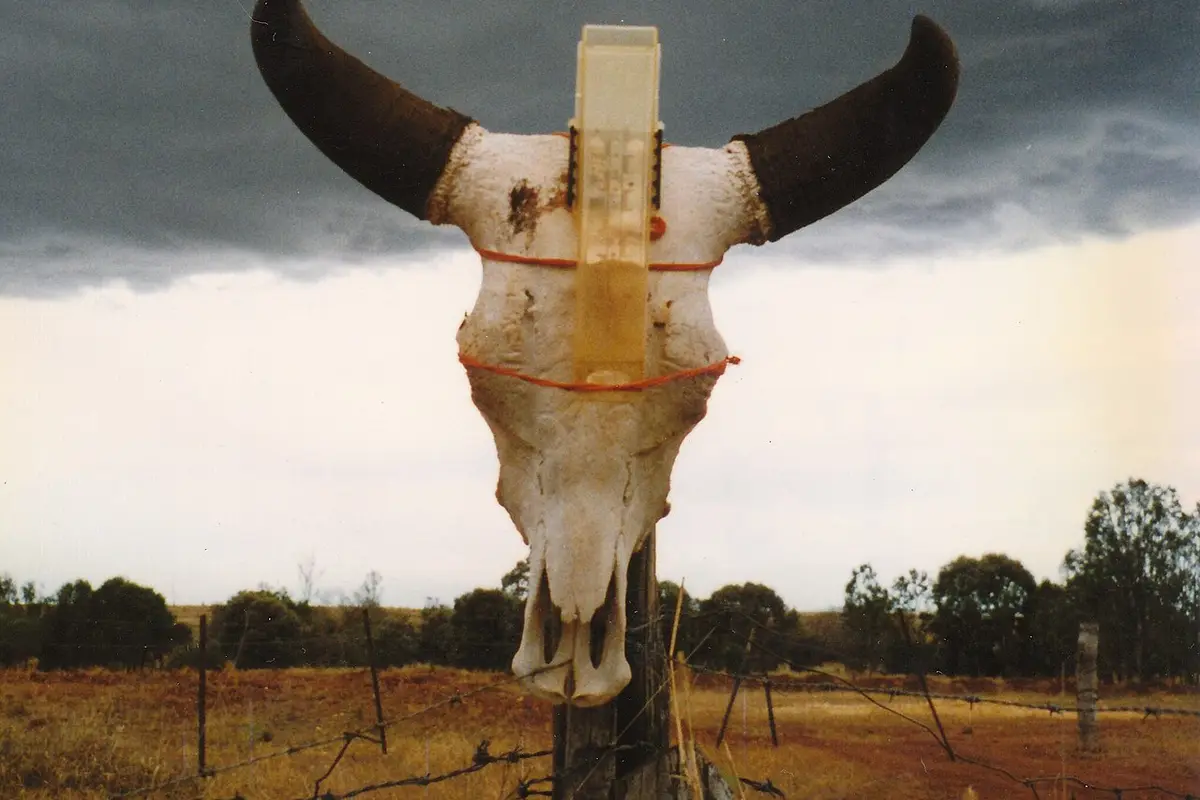

To read a rain gauge, get your eyes level with the water and read the mark at the bottom of the curved water surface, in millimetres. Do it at the same time each day, ideally 9am, write the number down straight away, then empty the gauge.
Storms can leave your rain gauge showing odd numbers, and that can be frustrating. Leaves, insects and dirt in the funnel can throw a reading out, so check the funnel and tube after heavy rain. Set your gauge on firm, level ground away from walls and trees to avoid splash and wind errors. Record each reading with the date and time so you can spot trends and errors.
A quick rinse and a check for leaves will keep your figures honest.
What Is A Rain Gauge?
A rain gauge is a simple instrument that measures rainfall. It collects rain in a clear, marked tube or cylinder, and the reading shows how deep the rain would be on flat ground. In Australia we measure in millimetres. Older farm rain books often use points, and our guide to converting points of rain to mm shows how to bring them up to date.
Place the gauge outdoors on level ground, away from trees and buildings. Good placement makes your rainfall records more accurate. Check for debris and overflow before you take a reading.
Steps To Read A Manual Rain Gauge
To read a manual rain gauge, start with the meniscus. This is the curve at the top of the water in the tube. Note where the bottom of it sits for an accurate reading. Then record your measurement at the same time every day.
Consistency helps you track changes over time.
Observe The Meniscus For Accuracy
Bend down until your eye is level with the water. Looking from above or below makes the water seem higher or lower than it really is. Read the mark that lines up with the bottom of the curve, not the edges where the water climbs the tube.
Record the value in millimetres. If there's water in the gauge but it hasn't reached the first mark, write "trace" rather than zero, so small showers still show up in your log.
Record Measurements Consistently
The Bureau of Meteorology reports each day's rainfall as the total for the 24 hours to 9am, so reading at 9am lets you compare your figures with theirs. Use millimetres for every reading so your records stay consistent.
Make sure the gauge is level and clear before each reading. Enter each value into one log or app so it's easy to compare over time.
Tips For Accurate Rainfall Measurement
- Place the gauge on a flat, open patch of ground.
- Clear leaves and debris before each reading.
- Check the meniscus at eye level.
- Empty the tube straight after you write the reading down.
- At the start of each season, and after strong storms, check the gauge is still level and not cracked.
- Keep it clear of trees, walls and sheds, but not so exposed that strong wind blows rain past the funnel.
- Now and then, compare your readings with a nearby Bureau station. A big difference can point to a problem with the gauge or its spot.
Measure level, read clearly, note units.
Conclusion
Reading a rain gauge is simple. It helps you understand the rain where you live and work. Follow these steps and you'll measure accurately every time, and regular readings give you useful records for planning, weather watching and saving water.
Keeping A Record You Can Trust
A reading is only useful once it's written down. Read at the same time each day, write the number down straight away, and note trace days and days you missed, so gaps don't look like dry days. Keep everything in one place.
The free GaugeMate rain gauge app does this for you. Enter the morning's reading in a few seconds and it keeps your daily, monthly and yearly totals safe, even if you lose your phone.